
Most people think pitching is about confidence, but that’s not what moves the needle. You can be confident, polished, and passionate, and still lose someone’s attention in seconds. The real purpose of a pitch is to remove uncertainty as fast as possible. If the listener is confused at any point, you’ve already lost them.
When someone hears your idea, they’re silently evaluating it. They want to know if it solves a real problem, if people will actually use it, and if it can make money. They’re also wondering why it doesn’t already exist or why you’re the one to build it. Your pitch needs to answer all of that—quickly and clearly.
1. Start With a Problem That Actually Matters
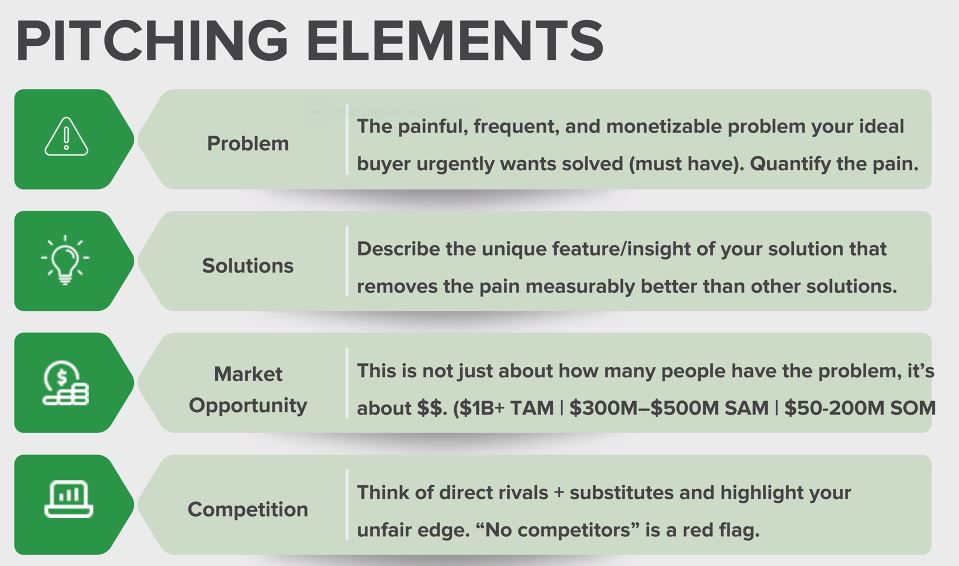
Every strong pitch starts with tension, not excitement. If there’s no real problem, there’s no reason for your idea to exist. This is where most people go wrong—they start talking about what they built instead of why it matters. Nobody cares about your solution until they care about the problem.
A strong problem should feel real and immediate. It should be something people deal with regularly, something that costs them time, money, or energy. If it feels vague or optional, it won’t land.
- Painful → it creates frustration or loss
- Frequent → it happens often, not once in a while
- Monetizable → people are willing to pay to fix it
When you describe the problem properly, the listener should almost nod along. That’s how you know you’ve done it right.
2. Present the Solution Clearly (Not Impressively)
Once the problem is clear, your solution should feel like a natural next step. This is not the time to show off complexity or list features. The goal is to make your idea feel obvious and easy to understand. If someone has to think too hard, you lose momentum.
The simplest way to structure your solution is:
“We help [specific group] solve [specific problem] by [clear method].”
That one sentence should carry most of the weight. If it doesn’t, your idea is still too fuzzy. Clarity here builds confidence instantly.
- Focus on outcome, not features
- Keep it to one clean sentence
- Make sure it directly connects to the problem
If someone repeats your idea back to you correctly, you’ve nailed this step.
3. Go-To-Market Strategy: Where Most Ideas Fall Apart
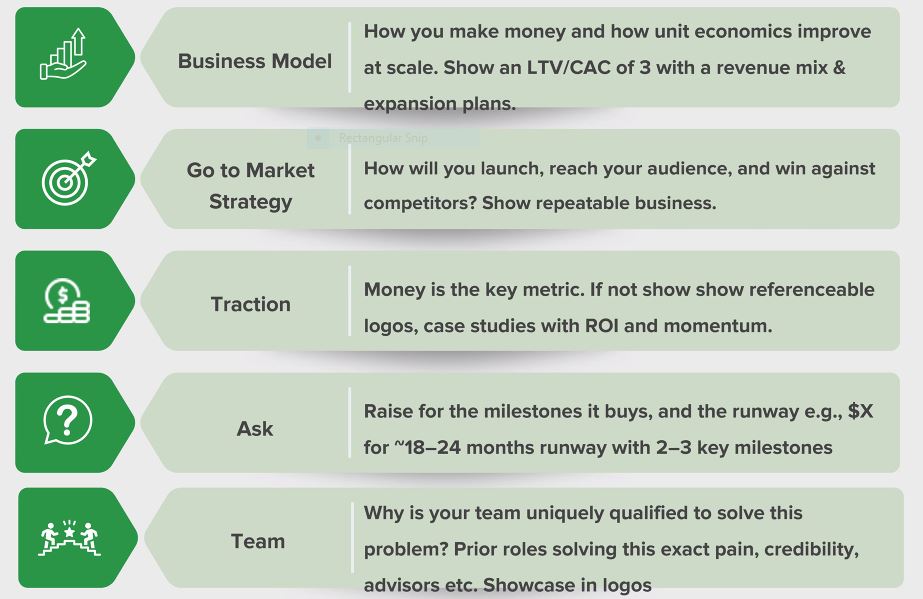
This is the part that separates ideas from actual businesses. A lot of people say things like “we’ll use social media” or “we’ll run ads,” but that doesn’t mean anything. A real go-to-market strategy shows how you’ll actually get your first users.
You need to think in terms of where your audience already exists and how you can reach them without friction. The clearer this section is, the more credible your pitch becomes. It shows you’ve thought beyond the idea stage.
- Channel → where your audience is (YouTube, Reddit, SEO, etc.)
- Hook → why they’ll pay attention
- Conversion → how they become users or customers
If you can’t explain how you’ll get your first 10 users, your pitch isn’t ready yet. This is where most people need to slow down and think deeper.
4. Monetization: Make the Money Path Obvious
If your pitch doesn’t clearly show how money is made, it feels incomplete. You don’t need complex financial projections, but you do need a clear path. The listener should understand exactly how this becomes a business.
The key here is simplicity. Complicated monetization models create doubt, not confidence. A clean, logical structure always wins.
- Who is paying?
- How are they paying?
- Why is it worth it to them?
When those three are clear, your idea starts to feel real. Without them, it still feels like a concept.
5. Competitive Edge: Why You, Not Someone Else
You don’t need to prove that no competition exists. In fact, competition often validates the idea. What you need to show is why your version stands out.
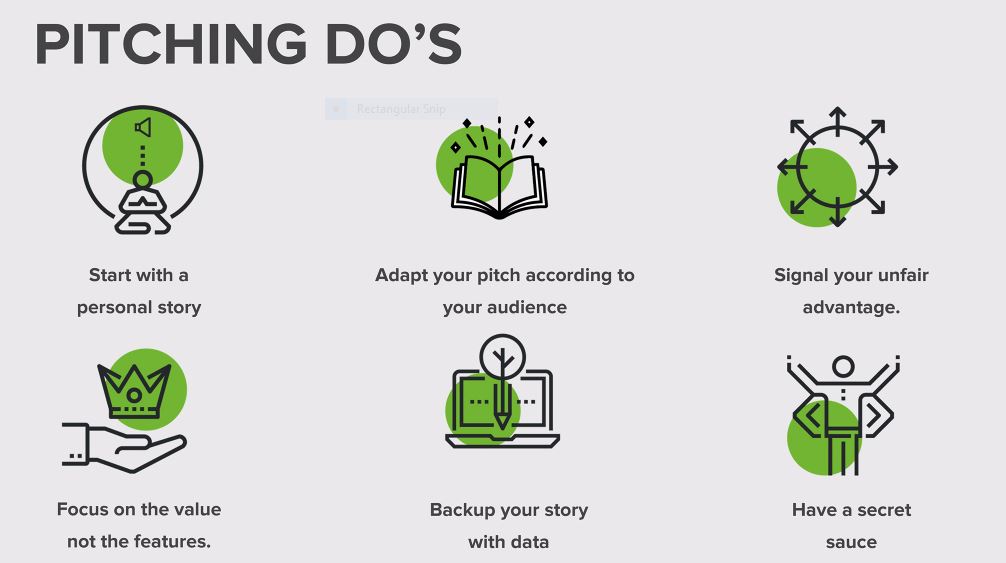
This doesn’t have to be dramatic. It just has to be clear. A small, focused advantage is often more powerful than trying to be everything to everyone.
- Faster results
- Lower cost
- Simpler experience
- More niche-focused
- Better usability
If someone asks, “Why wouldn’t I just use something else?” you should have a clean, confident answer ready.
6. Repeatability: Turning an Idea Into a System
This is where your pitch shifts from interesting to investable. A real business isn’t built on one-off wins—it’s built on repeatable systems. You need to show that your idea can grow beyond you.
Think about how users come in, how value is delivered, and how revenue continues. If those pieces are connected, your pitch becomes much stronger.
- Can you consistently acquire users?
- Can you deliver value at scale?
- Can this run without constant manual effort?
When those answers are yes, your idea starts to look like a real opportunity instead of a temporary project.
7. The Full Pitch Structure (Keep It Simple)
At the end of the day, a strong pitch is not complicated. It follows a clear structure that removes confusion step by step. If you stick to this, you’ll already be ahead of most people.
- Problem
- Solution
- Target audience
- Go-to-market strategy
- Monetization
- Competitive advantage
That’s your entire pitch. No fluff, no filler.
Final Thought
A great pitch doesn’t try to impress—it makes understanding effortless. When everything is clear, logical, and grounded, people don’t feel like they’re being sold to. They feel like they’re seeing something that just makes sense.
If you focus on clarity over complexity, you’ll notice something interesting. People stop asking basic questions and start asking deeper ones. That’s when you know your pitch is working.